Posts

Reading Notes: Laos B
Image
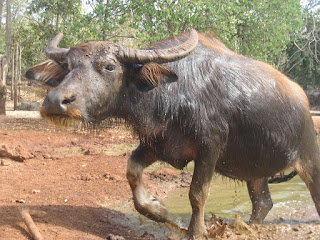
The earlier themes continued in this second half of the Laos reading. There is still an abbreviated sense of details, and the text flows as if it was "poorly" translated. This is pretty evident in the story The Legend of the Rice. Even as it starts, the setting is limited to vague descriptions that don't speak very much to the mental images the reader gets. The text is very choppy, but with a theme that is still evident, the story shows that you can reduce a story down to the bare bones and still be effective. Buffalo! Link .  Story: From Laos Folk-Lore by Katherine Neville Fleeson (1899). Link . 

Reading Notes: Laos Part A

Image
Stone in Laos. Link .  I was really interested to read this week's selections from Laos. The translations of these first selections were a little rough, and the hardest to follow this semester. It was all still manageable, but just took a little more concentration and rereading. The Story that stuck out to me most was The Mountain Spirits and the Stone Mortars. The story continued the unit's theme of a seemingly vague story-telling style, but still what I would call "effective storytelling." It had a point to the plot that told a generic, though utilitarian, narrative. But the lesson I took away is to not get stuck up in the details when a vague storytelling method can work. I think finding the sweet spot between the two is key, but writing in this style is a good way to practice focusing on the story's theme. Bibliography: Source: Laos Folk-Lore by Katherine Neville Fleeson. Link to the UN-Textbook.

Week 6 Lab: No Verys

Image
I checked out a couple of the articles from the Most Popular tab on Writers Write, but two stuck out to me as useful for this class specifically. The first was "45 Ways To Avoid Using The Word 'Very.'" With a course designed around creative writing, something that includes a lot of description, ridding ourselves of this unnecessary word is a great step towards better writing. Further, when using "very," writers often miss out on opportunities to use more colorful language. I liked the Kleinbaum quote that the article mentions, saying that using the word is lazy and that "A man is not very tired, he is exhausted. Don't use very sad, use morose." Link to this article. The second article that stuck out to me was a little more direct, titled "25 Myths To Use As Writing Prompts." This one seems a bit obvious, but it matches with the motivation for this class- that myths can be a great inspiration towards creative writing. Link to thi...

Reading Notes: Arabian Nights Reading B

Image
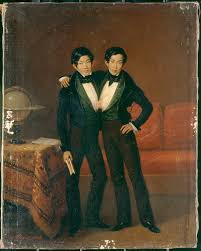
Twins. Link .  This entire section of reading followed the story of Aladdin and the Wonderful Lamp. This is probably the most iconic story that most kids who grew up in the Disney-era identify with "Arabian Nights." The story reads with a classic folklore theme where the narrator is directly "telling" a story to the reader. There are obviously a lot of differences form the Disney adaptation that turned into Aladdin, namely surrounding the ending. One thing that can be taken from it is the utility of a false character, where the writer can have differing character aspects in the same "person." Bibliography: Arabian Nights, Selection from  The Arabian Nights' Entertainments.  Link .

Reading Notes- Arabian Nights Reading A

Image
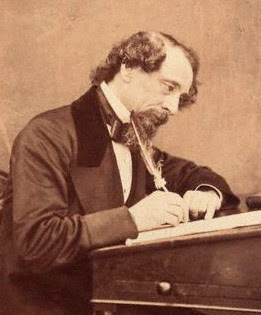
Specifically, the notes here are on The Story of the Merchant and the Genius. I want to pay attention to the direct address and how it continues through until the end of the story.  The story has a personal connection, and there is an element where the reader sees the narrator as a character by themselves. Near the end of the story, as the plot becomes more disconnected from the narrator, the gap in connection seems to widen as well. This is an interesting narrative tool, one that I could use in the "retelling" of a story as a story itself. The story ends with a wrap up that brings the reader back to the same level as the initial familiarity with the narrator, but in a way that helps emphasize the conclusion. What I picture when I think of Narrator. Link . Bibliography: Arabian Nights, Selection from The Arabian Nights' Entertainments. Link .

Tech Tips: Most Recent Posts

I wanted to add a box that had quick links to my most recent posts. This way, instead of navigating the table of contents, it would have an immediate way to find my most recent work. I think that it will make constructive comments more useful and spread out, instead of concentrating feedback on titles that "stand out." The instructions found on the tech tip page are very easy to follow, but there was one snag. When applying the feed, the first prompt asks for a "feed URL." I just went ahead and copy/pasted my blogs URL into the dialogue box. That way it will pull the most recent stories from the homepage, instead of having to manually link each post.

Week 5 Story: Tragedy at Sea

Image
A Tragedy at Sea  It was around my sixth month at sea that I began this new leg of my troublesome expedition. There was a week of storms, with our ship in a constant state of being beaten and ravaged by the swells. None of my crew made it through that week without becoming terribly ill, even though we were a band of ocean-hardened merchants. However, by the end of that week, the least of the men's worries were that of seasickness. On the seventh night, right after we had finished supper below the deck, I heard an excruciating crack. It seemed like thunder surrounded us as a lightning bolt struck the stern of the ship. Unfortunately, the reality was much worse. I immediately began to feel my whole body shiver as the ship twisted around me. Four of the five crewmembers in the galley were dispatched to the bow to investigate the damage, as surely this snap was a sign of the boat's hull splintering. Darius, my first mate, ran up the galley stairs to disengage th...