Posts

Showing posts with the label Reading

Week 14 Reading: Brothers Grimm (Ashliman) B

Image
Not your normal Bitcoin Mining As I entered the second part of this week's Brothers Grimm stories, I was still lucky enough to be reading some unfamiliar stories. Right off the bat, I wondered if The Little Lamb and The Litte Fish is responsible for the origin on "Eenie Meenie Miney Moe." Obviousy, some of the text was a little bit different in the Brothers Grimm story. But it would surprise me if the premise and a segment of the words were so similar and it was not the foundation. Moving forward there was some fantastic imagery going on in Simeli Mountain. I felt like I was among the gold and silver within the depths of the mountatin. The story had a pretty shocking ending and I felt like it was not super related to the rest of the story. Maybe a more sensible ending would be for the brother to remain trapped after the mountain closed on him for uttering the wrong name. Either way, reading this second part was yet again a delightful trip down a familiar lane, albeit ...

Reading Notes: Dante's Inferno A

Image
Dante and Virgil  For this week I had scheduled to do the Brothers' Grimm stories because of how much I enjoyed them as a kid. But when I sat down to begin reading A for it, I saw that Dante's Inferno was also an option and I could not resist (no pun intended!). So for this week I will be concurrently doing the Dante reading. I had always been curious about the Comedy, and the first half of this unit's reading did not disappoint. I had checked out sections of the text in the past, so I was familiar enough to recognize that this is a very different translation than I was used to. For instance, I have been made to recognize the plaque above the entryway to Hell as ending with "Abandon all hope, all ye who enter here." I think that the difference is not incredibly important as far as an informal reading like through this unit, but if I was doing a close reading I imagine I would want to get as close to the original Italian as I could. Running into Socrates and Pl...

Week 14 Reading: Brothers Grimm (Ashliman) A

Image
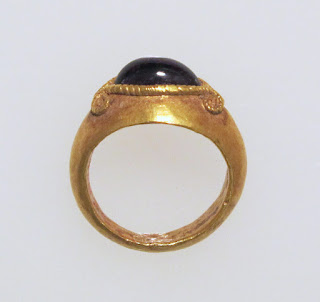
The All Important Ring  This week I am reading the Ashliman unit of some classic Brothers Grimm stories. Some of part A's pieces were very familiar, but others I had never heard of. I remember growing up that I had a huge manuscript of Grimm stories (it seemed large at the time, and I think I would feel the same way today). But nowhere in that book did I read Cat and Mouse in Partnership or The Seven Ravens. They both definitely had some familiar literature themes, like the manipulative dialogue that leaves protagonists in some sort of pickle. In the Seven Ravens it took the seventh dwarf's help to resolve the conflict. In so many of these stories of folklore, there seems to be a reoccurring timeline. Even when stories can be entirely unfamiliar to a reader, there can always be elements that seem familiar and allow readers to relate to the text. Story source: Dan Ashliman's Grimm Brothers' Children's and Household Tales. Link . Image source: Link . 

Reading Notes: Canterbury Tales B

Image
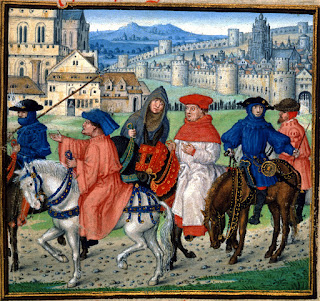
Headed off to Canterbury So I am continuing the Canterbury Tales for this second part of my reading this week. These few stories had the same sort of olde english feel but more with tone than diction. The actual words were a lot more intelligible than part A, and certainly than the King Arthur texts from last week. The return of animal characters was a useful inspiration when it came to my portfolio project this weekend. While some of them were a bit concerning, like Little Hugh, there are things that can be learned by all pieces of writing. Image Link   Story Source: Eva March Tappan's  The Chaucer Story Book.  Link .

Reading Notes: Canterbury Tales A

Image
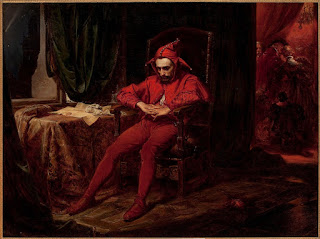
Jester Jester  This week I am diving into the class Canterbury Tales. As I dove into reading the first part, I was reminiscent of the King Arthur unit last week. The stories began to have a similar language when I saw it- King Arthur! So, entering the unit with such a connected- but still outside- story like The Unkown Bride made for a smooth introduction to Canterbury. I enjoy how these stories seem to follow what I associate most with a traditional folklore timeline. The endings draw the stories to a close in what I interpret as the flip side of "once upon a time." The Promise of Dorigan was probably my favorite story in this first part of Canterbury Tales. The protagonist would fit in well with the portfolio project I have been working on with the performers-turned-alchemists. Dorigan seems to go on almost an adventure story-type itinerary, seeing wondrous sights and interacting with other performers. Story Source: Eva March Tappan's The Chaucer Story Book. ...

Reading Notes: 1 Corinthians

Image
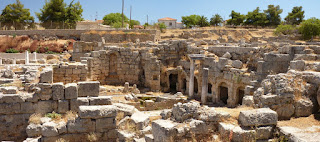
Corinth Today  This week I read First Corinthians for my continuing project of looking at books of the Bible through a literary lense. Corinthians is a pretty interesting to read because, like other works attributed to Paul, it was written as a letter. Understanding the chapter like this puts a whole new perspective on the text. At the time, Corinth was a port city. This means that it was full of sailers and other less-than-savery populations. Corinthians was sort of a party city at the time, and reading Paul's letter to the people there in this context was pretty eye-opening. I noticed a lot more instances of what seemed like instructions, Paul answering questions about the morality of a gentile life spent following Christianity. Seeing the piece through this lense almost makes it stand out as an argument for me, rather than a classically-interpreted sermon.  Source: 1 Corinthians, Harper Collins Study Bible Image Source: Link . 

Reading Notes: King Arthur B

Image
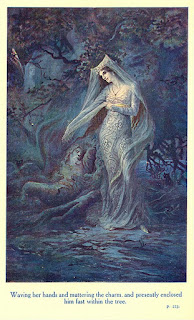
Continuing my reading this week, I have now been exploring the second part of King Arthur. Really it is section A, because I went in reverse order, but same thing really. The use of olde english language seemed a lot lessened during this section. Besides names of character roles, such as squires in Questing Beast or the names featured in Round Table, most of the text reads without the multiple takes that section B required. The death of Merlin in this section caught me by surprise. To have Vivien bury him alive after he taught her so many things seems out of the theme of King Arthur, so perhaps these texts more closely follow the original stories. What I remember reading as a child did not, understandably, have these somethat-adult themes. Still, the language used even without the elevated semantics highlighted in part B, is so effective at transporting the reader to the scene.  Merlin and Vivian Story from King Arthur: Tales of the ROund Table by Andrew Lang and illustrated by ...

Reading Notes: King Arthur A

Image
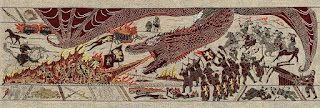
I have been waiting for this unit so that I could read these stories ever since we began the semester. King Arthur is surrounded by such great stories and provides material for endless creative writing. The reading section this week has shown me a lot of new insights, despite me having read such a large quantity of King Arthur narratives. For instance, I am not sure how it has always gone over my head that Galahad is interpreted as a son of Sir Lancelot! Overall, reading these stories has been a serious trip down memory lane. I remember the classis use of old(e) English language in these stories, filled with thou, ye, and nigh. Sometimes it takes rereading a line a few times and using context to tell with some of the language used. But still, the usage immedietely places the reader back in the time of medieval castles. How appropriate that this week coincides with the season premiere of Game of Thrones!   GoT or King Arthur?  Image Link .  Story:  King Arthur: T...

Reading Notes: Native American Heroes Part B

Image
Dreamcatcher Task  Continuing this week's chapter of Native American stories, I read the second part of the Heroes option. I had found the use of animals and non-specific creatures as characters so unique in the past section, though also characteristically folk, that I was pleased to see it continued with part B. These stories have characters that are so simplified that it allows the reader to focus entirely on the story itself. From Son-In-Law to Thrown-behind-the-curtain, the names of the characters provide just enough information to read the narrative, while not distracting form the story. As the latter navigated a series of stories that seemed to follow a single timeline, we don't garner TOO much information about Thrown himself. Instead we see his interactions with other players that are shed in a similar light. I think tomorrow I will take an attempt at writing in this style, specifically in the narrative of the Son-In-Law tasks. Wemicus' challenges seem very full...

Reading Notes: John

Image
John: Not the Gnostic  Completing the group of Gospels, my outside reading this week was the book of John. It is, of course, a highly important section of the Christian canon. What I found so interesting about it this week was its contrast with Gnosticism. When reading the scripture against this backdrop, almost the entire chapter is full of language that spoke of God as the creator of the cosmos, something that challenges Gnosticism. Reading the gospels this semester in a renewed light of practical investigation has opened my perspective to so many new views. I had never conceptualized these texts as pieces of writing that were actually created for a specific purpose. John, like Corinthians, is full of pieces of information that directly show the challenges faced by the early Christian church. Writing: John, Harper Collins Study Bible Image: Link . 

Reading Notes: Native American Heroes Part A

Image
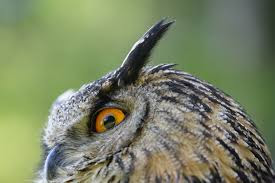
Ear This week I am stoked to be reading stories from the Native American unit. I chose to read the Hero tales because I was interested to see what kind of singularity would remain throughout these stories. The one that really stuck out to me was the final story of this reading, The Attack on the Giant Elk and the Great  Eagle. The story has fantastic character elements. Not only does it continue the use of animals as their own characters alone, such as "One day Lion was hunting when..." but things like body parts alone can be characters. In this story, the ear of the eagle is made to be an entirely different character, telling the eagle which direction to pay attention to. Story: The Attack on the Giant Elk from the Jicarilla Apache. Link .  Image: Link . 

Reading Notes: Brer Rabbit: A

Image
This week's reading was something I have been looking forward too. I have always been a Brer Rabbit fan and remember some of these stories fondly. I was thrilled to see the way characters speak in the stories have not been changed. That was always a feature that I thought added character to the stories and gave them their own feeling from the beginning. It would be a great excersize to try and write a story using this dialectic style. Of course, the tar baby story brought back some real memories. The relationship between the narrator and the reader is very special in these stories. The language does such a great job of creating that familiarity, which translates into the draw that the stories have for us. Story Credit: Joel Chandler Harris's series of Brer Rabbit stories. ( Link ). Image Credit: Brer Rabbit. From Wikipedia Commons. 

Reading Notes: Laos B

Image
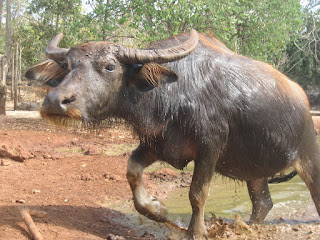
The earlier themes continued in this second half of the Laos reading. There is still an abbreviated sense of details, and the text flows as if it was "poorly" translated. This is pretty evident in the story The Legend of the Rice. Even as it starts, the setting is limited to vague descriptions that don't speak very much to the mental images the reader gets. The text is very choppy, but with a theme that is still evident, the story shows that you can reduce a story down to the bare bones and still be effective. Buffalo! Link .  Story: From Laos Folk-Lore by Katherine Neville Fleeson (1899). Link . 

Reading Notes: Laos Part A

Image
Stone in Laos. Link .  I was really interested to read this week's selections from Laos. The translations of these first selections were a little rough, and the hardest to follow this semester. It was all still manageable, but just took a little more concentration and rereading. The Story that stuck out to me most was The Mountain Spirits and the Stone Mortars. The story continued the unit's theme of a seemingly vague story-telling style, but still what I would call "effective storytelling." It had a point to the plot that told a generic, though utilitarian, narrative. But the lesson I took away is to not get stuck up in the details when a vague storytelling method can work. I think finding the sweet spot between the two is key, but writing in this style is a good way to practice focusing on the story's theme. Bibliography: Source: Laos Folk-Lore by Katherine Neville Fleeson. Link to the UN-Textbook.

Reading Notes: Arabian Nights Reading B

Image
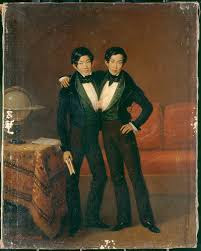
Twins. Link .  This entire section of reading followed the story of Aladdin and the Wonderful Lamp. This is probably the most iconic story that most kids who grew up in the Disney-era identify with "Arabian Nights." The story reads with a classic folklore theme where the narrator is directly "telling" a story to the reader. There are obviously a lot of differences form the Disney adaptation that turned into Aladdin, namely surrounding the ending. One thing that can be taken from it is the utility of a false character, where the writer can have differing character aspects in the same "person." Bibliography: Arabian Nights, Selection from  The Arabian Nights' Entertainments.  Link .

Reading Notes- Arabian Nights Reading A

Image
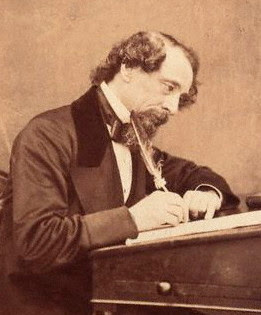
Specifically, the notes here are on The Story of the Merchant and the Genius. I want to pay attention to the direct address and how it continues through until the end of the story.  The story has a personal connection, and there is an element where the reader sees the narrator as a character by themselves. Near the end of the story, as the plot becomes more disconnected from the narrator, the gap in connection seems to widen as well. This is an interesting narrative tool, one that I could use in the "retelling" of a story as a story itself. The story ends with a wrap up that brings the reader back to the same level as the initial familiarity with the narrator, but in a way that helps emphasize the conclusion. What I picture when I think of Narrator. Link . Bibliography: Arabian Nights, Selection from The Arabian Nights' Entertainments. Link .

Reading Notes: Voyages of Sinbad B

Image
The second half of the Sinbad adaptation was pretty consistent with the first. There were a lot of exhausted themes, but I noticed a much bigger element of object involvement. That is, for some reason, the second half seemed to include a significantly higher amount of object descriptions and plot involvement than in the first half. I remember that in the first half, for instance, during the entire first and second voyage, Sinbad merely is described as having "merchandise." In the second part, the narration describes objects much more deeply. In fact, the second half seemed to involve a much higher level of descriptions in general. This included depictions of the characters and locations as well. What I took away from the reading is that you can vary the number of involved devices from story to story. In one narrative, you do not need to stick to a certain level of narrative versus descriptions. As the story develops, so too can the ratio of textual devices. (Sinbad's...

Reading Notes: Voyages of Sinbad A

Image
(Mammoths, from NPS . ) Whew. This was a very stereotypical example of what I think of as a true folklore story. It definitely follows a sort of Odysseus train with the first person and "voyage" structure. Odyseeus' story may be more believable though, sirens and all. Sinbad really should have just been satisfied and glad to arrive home, let alone with a profit. But he continued setting off and getting himself into similarly periolous situations. But, I suppose a story wouldn't be  much of a story without trials. This was a pretty cool example of multiple stages of one long narrative though. I really like the idea of creating multiple short stories that follow in a direct chronological order from each other.  From The Arabian Nights' Entertainments by Andrew Lang, illustrated by H.J. Ford (1898). Link . 

Reading Notes: Aesop's Fables (Jacobs) Reading A

Image
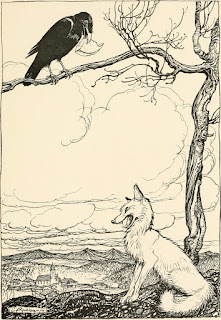
The Fables of Aesop  by Joseph Jacobs Reading link  Aesop's Animals. From wiki commons.   This was such a pleasant exploration of characters and stories. I was shocked at how short a story could be the still portrayed a narrative so clearly and with so much depth. There were two versions of The Fox and the Crane ( direct link)  where they told the same fables but in even less words. The first was already short, maybe a paragraph and a half, but the second reduced the same story down to a five-line limerick. It would be interesting to explore writing two versions of one story with varied lengths.  This could be helpful to explore how concise I want my texts to be. Also, a side note: this reading included a version of the saying "love can tame the wildest." In this fable, it set this up to portray the misleading or judgment-clouding attribute of infatuation. I had always interpreted the saying as one that spoke to the (beneficial) strength of the feeling....

Reading Notes: Mark 9-16 (Part B)

Image
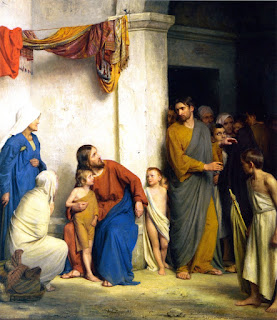
Jesus in the City. Wiki Commons. Jesus  I finished up the Book of Mark this evening and continued my enjoyment of such a masterfully written text. Jesus' transformation is highlighted in the second half after the (appropriately named) Transfiguration. The miracles become a little bolder, along with the encouragement of the receivers to spread the word. Not only does the dialogue become more externally driven, but the message is clear that "this is not the Messiah you were expecting." This further clarification is hinted at the retelling of the miracle of Bethsheda. There, it takes Jesus two attempts to restore sight to a blind man. His eyesight is completely fixed the second time and his vision goes from blurry to crystal clear. This pretty incredibly foreshadows the clarified picture of Jesus that is about to take place in the text. Jesus' messege becomes a little more drastic, now telling people to toss aside their worldly possessions and follow him. When they h...